
Six Sigma - Measurement Systems Analysis (PowerPoint PPTX Slide Deck)
PowerPoint (PPTX) 62 Slides
$34.50
Developed by a Senior Executive and Operational Excellence Coach with experience at organizations including NOKIA, MICROVENTION, and MAGELLAN, this presentation covers the key topics of a Measurement Systems Analysis (MSA).
Editor Summary
The Six Sigma - Measurement Systems Analysis is a 62-slide PowerPoint module from Operational Excellence Consulting LLC and a Senior Executive coach with experience at NOKIA, MICROVENTION, and MAGELLAN.
Read moreCovers 5 core sections—Introduction; Sources of Variation; Measurement System Terminology; Variable Gage R&R; Attribute Gage R&R—and includes 5 deliverables: Gage R&R worksheet for Minitab, measurement system evaluation checklist, statistical analysis tools, graphical templates, and audit guidelines. Targeted at quality assurance managers, operational excellence leaders, data analysts, and Six Sigma practitioners; sold as a digital download on Flevy.
Use this module when an organization needs to validate or improve measurement systems to ensure data integrity for process improvement, such as during training sessions, when conducting Gage R&R studies, or in workshops focused on measurement accuracy.
Quality assurance managers designing and running Variable Gage R&R studies to quantify repeatability and reproducibility.
Operational excellence leaders selecting and implementing improvement strategies like automation, visual aids, and audit guidelines to reduce measurement error.

Data analysts performing statistical analysis of Gage R&R results in Minitab and using graphical templates to interpret measurement variation.
Six Sigma practitioners incorporating measurement system evaluation checklists into quality control reviews.
The progression from identifying sources of variation through Variable and Attribute Gage R&R studies to improvement strategies follows standard Measurement Systems Analysis practice used in Six Sigma quality programs.
The Six Sigma Measurement Systems Analysis (MSA) Training Module includes:
1. MS PowerPoint Presentation including 62 slides covering the following topics:
• An Introduction to Measurement Systems Analysis (MSA)
• Determining the Relevance of a Measure or Metrics
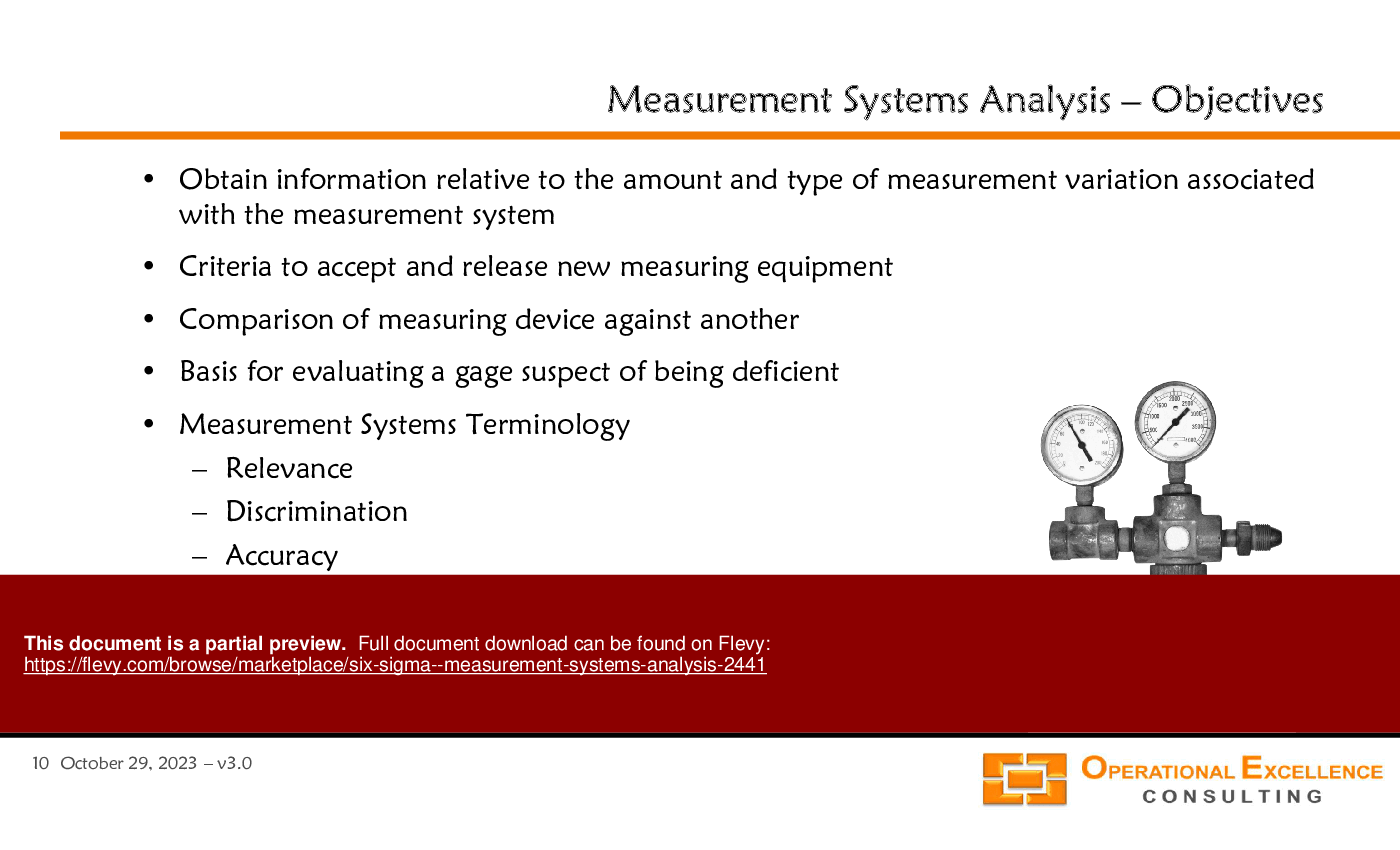
• Evaluating the Discrimination, Accuracy, Stability, Linearity, and Precision of a Measurement System
• Performing and analyzing a Variable or Attribute Gage Repeatability & Reproducibility (Gage R&R) Study using Minitab.
"After you have downloaded the training material, you can change any part of the training material and remove all logos and references to Operational Excellence Consulting. You can share the material with your colleagues and clients, and re-use it as you need. The only restriction is that you cannot publicly re-distribute, sell, rent, or license the material as though it is your own. Thank you."
This Six Sigma Measurement Systems Analysis PowerPoint is designed to equip executives with the necessary tools to critically evaluate measurement systems within their organizations. The content dives deep into the essential concepts of measurement error, emphasizing the importance of understanding variability in data collection processes. By addressing both repeatability and reproducibility, this module provides a comprehensive framework for identifying and mitigating measurement-related issues that can compromise data integrity.
The training material also includes practical applications using Minitab, allowing users to conduct Gage R&R studies effectively. This hands-on approach ensures that executives can not only grasp theoretical concepts, but also apply them to real-world scenarios. The insights gained from this analysis are crucial for making informed decisions that drive operational excellence and enhance process reliability.
Investing in this training module means committing to a culture of continuous improvement. By mastering Measurement Systems Analysis, leaders can foster an environment where data-driven decision-making thrives, ultimately leading to higher quality outcomes and increased customer satisfaction. This is a strategic step towards ensuring that your organization can trust its data and make impactful changes based on accurate insights.
Got a question about the product? Email us at support@flevy.com or ask the author directly by using the "Ask the Author a Question" form. If you cannot view the preview above this document description, go here to view the large preview instead.
MARCUS OVERVIEW
This synopsis was written by Marcus [?] based on the analysis of the full 62-slide presentation.
Executive Summary
This Six Sigma Measurement Systems Analysis (MSA) presentation, developed by Operational Excellence Consulting LLC, is designed to enhance understanding and application of measurement systems in quality management. It provides a thorough exploration of key concepts such as measurement error, sources of variation, and the significance of Gage Repeatability and Reproducibility (Gage R&R) studies. Buyers will gain the ability to evaluate measurement systems effectively, ensuring data integrity and reliability in process improvement initiatives.
Who This Is For and When to Use
• Quality assurance managers focused on process improvement
• Operational excellence leaders aiming to enhance measurement systems
• Data analysts responsible for interpreting measurement data
• Six Sigma practitioners looking to deepen their understanding of MSA
Best-fit moments to use this deck:
• During training sessions on Six Sigma methodologies
• When conducting Gage R&R studies
• In workshops aimed at improving measurement system accuracy and precision
• For team meetings focused on quality control and data reliability
Learning Objectives
• Define measurement system analysis and its importance in quality management
• Identify sources of variation affecting measurement systems
• Establish criteria for evaluating measurement system relevance and accuracy
• Conduct Gage R&R studies to assess measurement reliability
• Analyze measurement system performance using statistical tools
• Implement strategies to improve measurement systems and reduce variability
Table of Contents
• Introduction (page 1)
• Sources of Variation (page 3)
• Measurement System Terminology (page 3)
• Variable Gage R&R Study (page 30)
• Attribute Gage R&R Study (page 54)
Primary Topics Covered
• Measurement System Analysis - An overview of MSA and its critical role in ensuring data integrity for process improvement.
• Sources of Variation - Identification of actual process variation and measurement system variation, including operator effects.
• Measurement System Terminology - Key terms such as relevance, discrimination, accuracy, stability, linearity, and precision essential for understanding measurement systems.
• Variable Gage R&R Study - A detailed examination of the Gage R&R study methodology to evaluate measurement system performance.
• Attribute Gage R&R Study - Guidelines for conducting attribute Gage R&R studies to assess categorical measurement systems.
• Improvement Strategies - Techniques and tools to enhance measurement systems, including automation and visual aids.
Deliverables, Templates, and Tools
• Gage R&R Study worksheet template for Minitab
• Measurement system evaluation checklist
• Statistical analysis tools for Gage R&R results
• Graphical analysis templates for visualizing measurement data
• Guidelines for conducting effective measurement system audits
Slide Highlights
• Introduction to the significance of measurement systems in quality management
• Visual representation of sources of measurement variation
• Detailed breakdown of measurement system terminology with examples
• Step-by-step guide for conducting a Variable Gage R&R study
• Graphical analysis tools for interpreting Gage R&R study results
Potential Workshop Agenda
Introduction to Measurement Systems (30 minutes)
• Overview of measurement system analysis
• Discussion on the importance of accurate measurements
Sources of Variation and Measurement System Terminology (60 minutes)
• Identification of sources of variation
• Explanation of key measurement system terms
Conducting a Variable Gage R&R Study (90 minutes)
• Step-by-step guide to performing a Gage R&R study
• Hands-on practice using Minitab
Improvement Strategies for Measurement Systems (30 minutes)
• Techniques for enhancing measurement accuracy and reliability
• Discussion on implementing improvements in real-world scenarios
Customization Guidance
• Tailor the Gage R&R study design to fit specific operational contexts
• Adjust terminology and examples to align with organizational standards
• Incorporate company-specific measurement systems and processes into the training material
• Modify statistical analysis tools to reflect the data types used in your organization
Secondary Topics Covered
• Measurement error and its impact on data integrity
• The importance of calibration in measurement systems
• Techniques for ensuring measurement system stability
• Analysis of measurement system linearity and its implications
• Strategies for improving measurement precision and discrimination
Topic FAQ
How do I evaluate whether a measurement system is reliable enough for process improvement work?
A measurement system is evaluated by examining factors such as discrimination, accuracy, stability, linearity, and precision, along with sources of measurement variation. The provided material frames this as part of Measurement Systems Analysis and uses Gage R&R studies to assess repeatability and reproducibility with Minitab.
What does Gage R&R actually measure in a Six Sigma measurement system analysis?
Gage R&R measures how much variation comes from the measurement system itself by examining repeatability and reproducibility. The material explains repeatability as variation from the same operator and instrument, and reproducibility as variation across different operators using the same instrument in a Gage R&R study.
What sources of variation should I look at when reviewing a measurement system?
The material distinguishes between actual process variation and measurement system variation, including operator effects. It also highlights measurement error, calibration, and system stability as factors that can affect data integrity. These sources are introduced early in the training under Sources of Variation beginning on page 3.
What is the difference between variable and attribute Gage R&R studies?
Variable measurement provides a numerical value for a characteristic, while attribute measurement classifies items into categories such as acceptable or unacceptable. The material covers both study types separately, with Variable Gage R&R beginning on page 30 and Attribute Gage R&R beginning on page 54.
What should I look for when choosing an MSA training deck for my team?
A buyer should look for coverage of core MSA concepts, sources of variation, evaluation criteria, and practical study methods. The Six Sigma Measurement Systems Analysis (MSA) Training Module specifically includes 62 slides, Minitab-based Gage R&R application, a measurement system evaluation checklist, and graphical analysis templates.
Is it worth paying for an MSA template or training deck instead of building one internally?
The value depends on whether you need structured material that combines terminology, evaluation criteria, and practical study guidance in one place. The Six Sigma Measurement Systems Analysis (MSA) Training Module includes reusable training content, a Minitab worksheet template, and an evaluation checklist across 62 slides.
I need to train quality managers on measurement error and data integrity this quarter. Where should I start?
A practical starting point is a structured session that introduces measurement systems, explains sources of variation, and then moves into study execution. The Six Sigma Measurement Systems Analysis (MSA) Training Module even outlines a workshop flow covering introduction, terminology, Variable Gage R&R practice, and improvement strategies in 30-60-90-30 minute blocks.

I am getting inconsistent readings between operators. How should I investigate the problem?
The material suggests investigating operator-related measurement system variation through a Gage R&R study, which is designed to assess repeatability and reproducibility. It also points to supporting analysis through statistical tools, graphical analysis, and measurement system audits to isolate causes tied to operator effects and % R&R ratio.
I need something practical for a workshop on improving measurement accuracy, not just theory. What matters most?
Practical usefulness comes from having tools that let teams apply concepts during training rather than only review definitions. The Six Sigma Measurement Systems Analysis (MSA) Training Module supports this with hands-on Minitab use, graphical analysis templates, audit guidelines, and improvement strategies such as automation and visual aids.
Document FAQ
These are questions addressed within this presentation.
What is Measurement Systems Analysis?
Measurement Systems Analysis (MSA) evaluates the accuracy and reliability of measurement systems to ensure data integrity in quality management processes.
Why is Gage R&R important?
Gage R&R studies assess the repeatability and reproducibility of measurement systems, identifying sources of variation that can affect data accuracy.
How can I improve my measurement system?
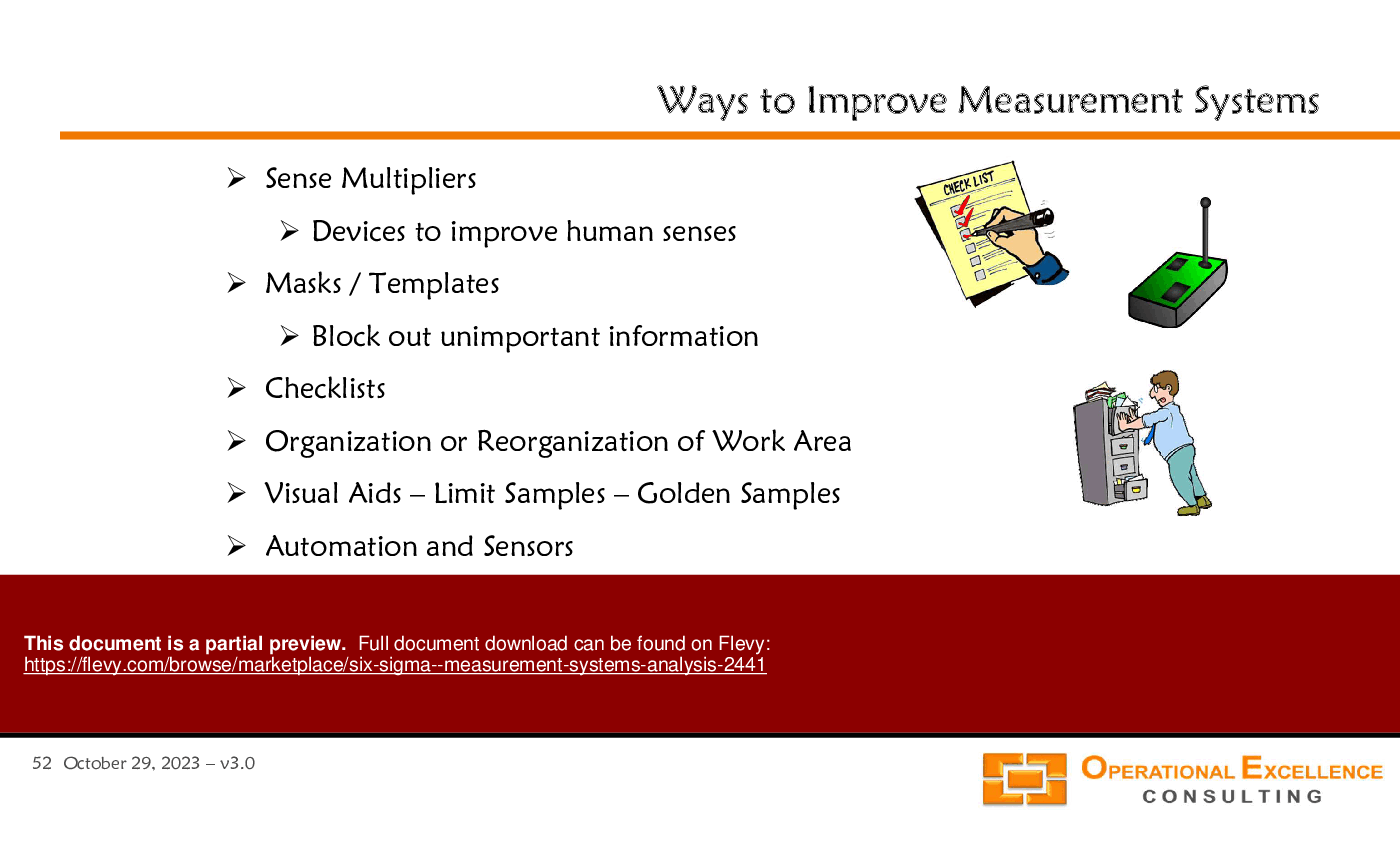
Improvements can be made by implementing automation, using visual aids, and ensuring proper calibration of measurement devices.
What are the key components of a Gage R&R study?
Key components include selecting appropriate samples, defining operator roles, and analyzing the results for repeatability and reproducibility.
What is the significance of measurement system stability?
Stability ensures that measurements remain consistent over time, which is crucial for reliable data analysis and decision-making.
How do I determine if my measurement system is accurate?
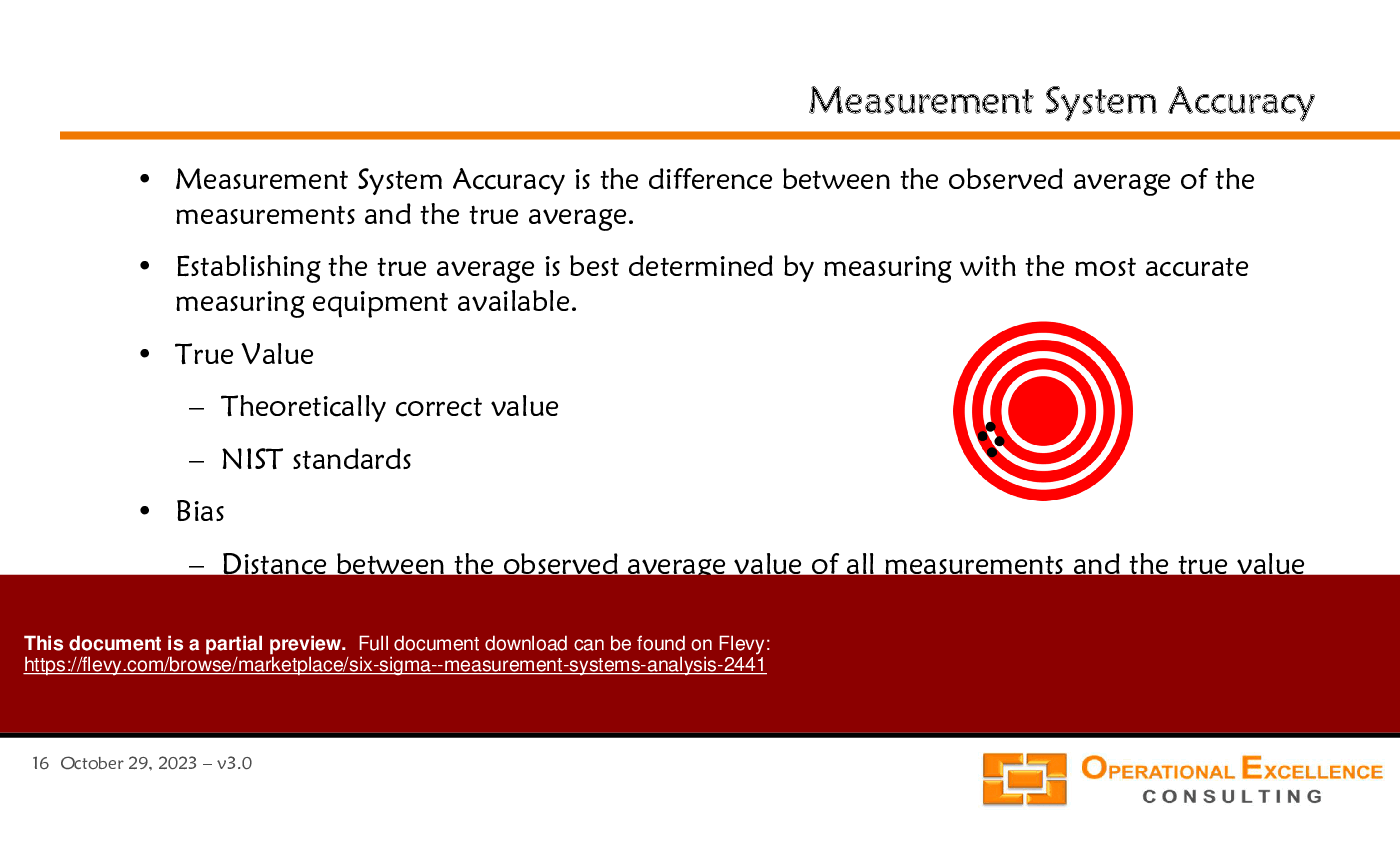
Accuracy can be assessed by comparing measurement results against known standards and evaluating the bias in the measurements.
What tools can I use for statistical analysis in MSA?
Minitab is commonly used for conducting Gage R&R studies and performing statistical analysis on measurement data.
How do I interpret the results of a Gage R&R study?
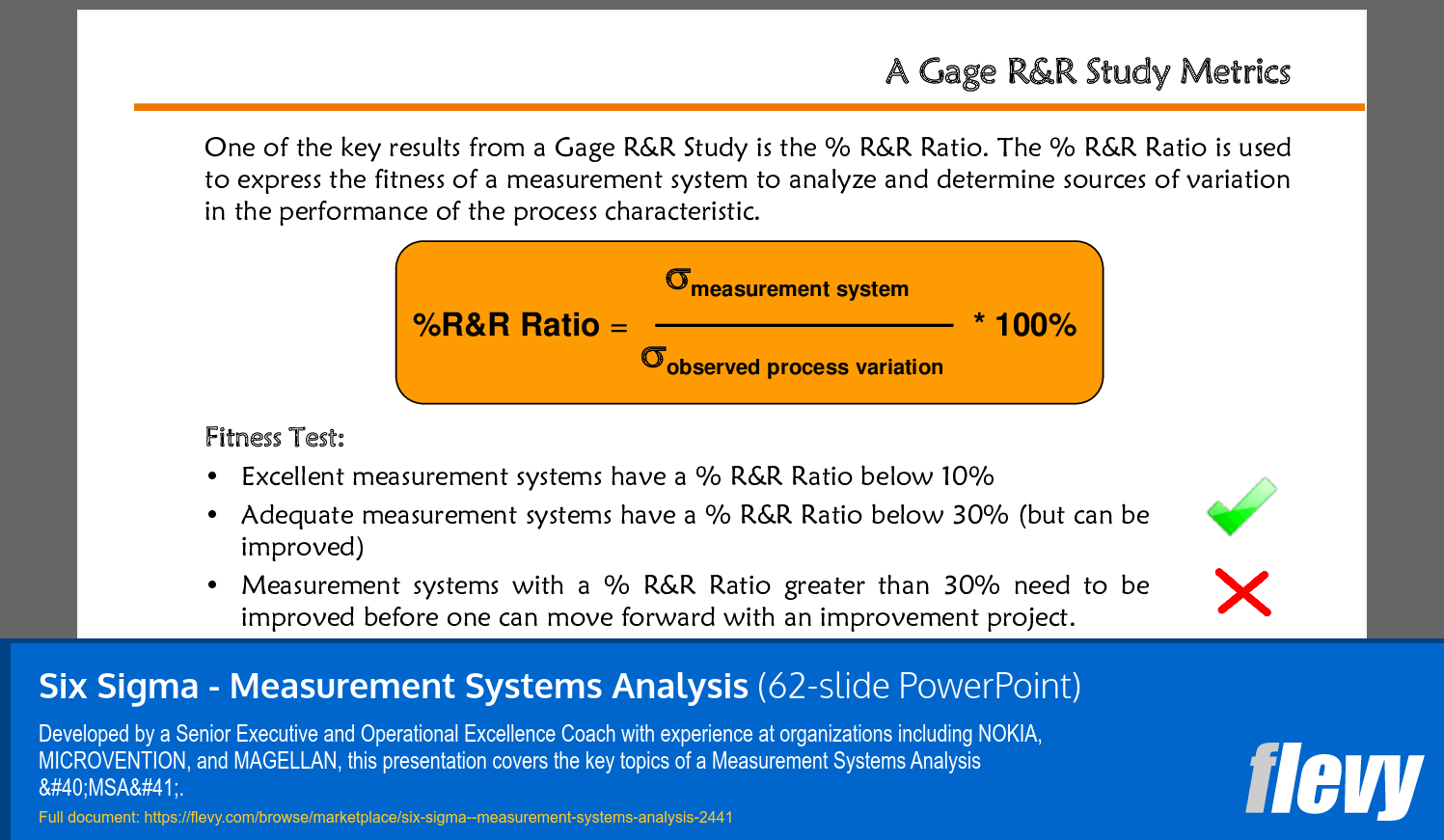
Results can be interpreted by analyzing the % R&R ratio, which indicates the proportion of total variation attributed to the measurement system.
Glossary
• Measurement Systems Analysis - A process to evaluate the accuracy and reliability of measurement systems.
• Gage R&R - A study to assess the repeatability and reproducibility of measurement systems.
• Measurement Error - The difference between the observed value and the true value due to variability in the measurement process.
• Relevance - The degree to which a measurement system measures important product or process characteristics.
• Discrimination - The ability of a measurement system to distinguish between different levels of a measured attribute.
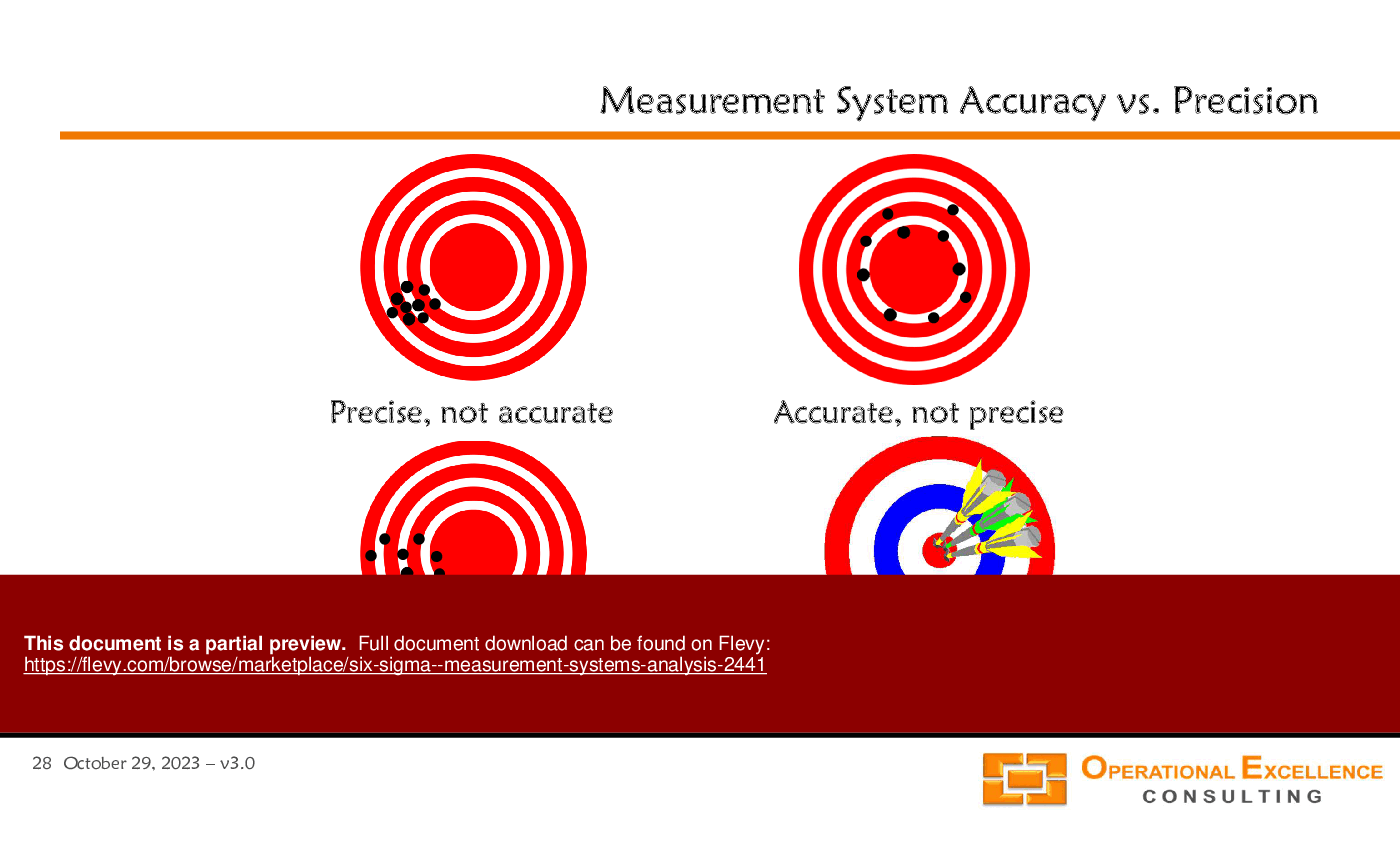
• Accuracy - The closeness of a measured value to the true value.
• Stability - The consistency of measurement results over time.
• Linearity - The degree to which a measurement system's accuracy remains consistent across its operating range.
• Precision - The degree to which repeated measurements under unchanged conditions show the same results.
• Repeatability - The variation in measurements taken by the same operator using the same instrument.
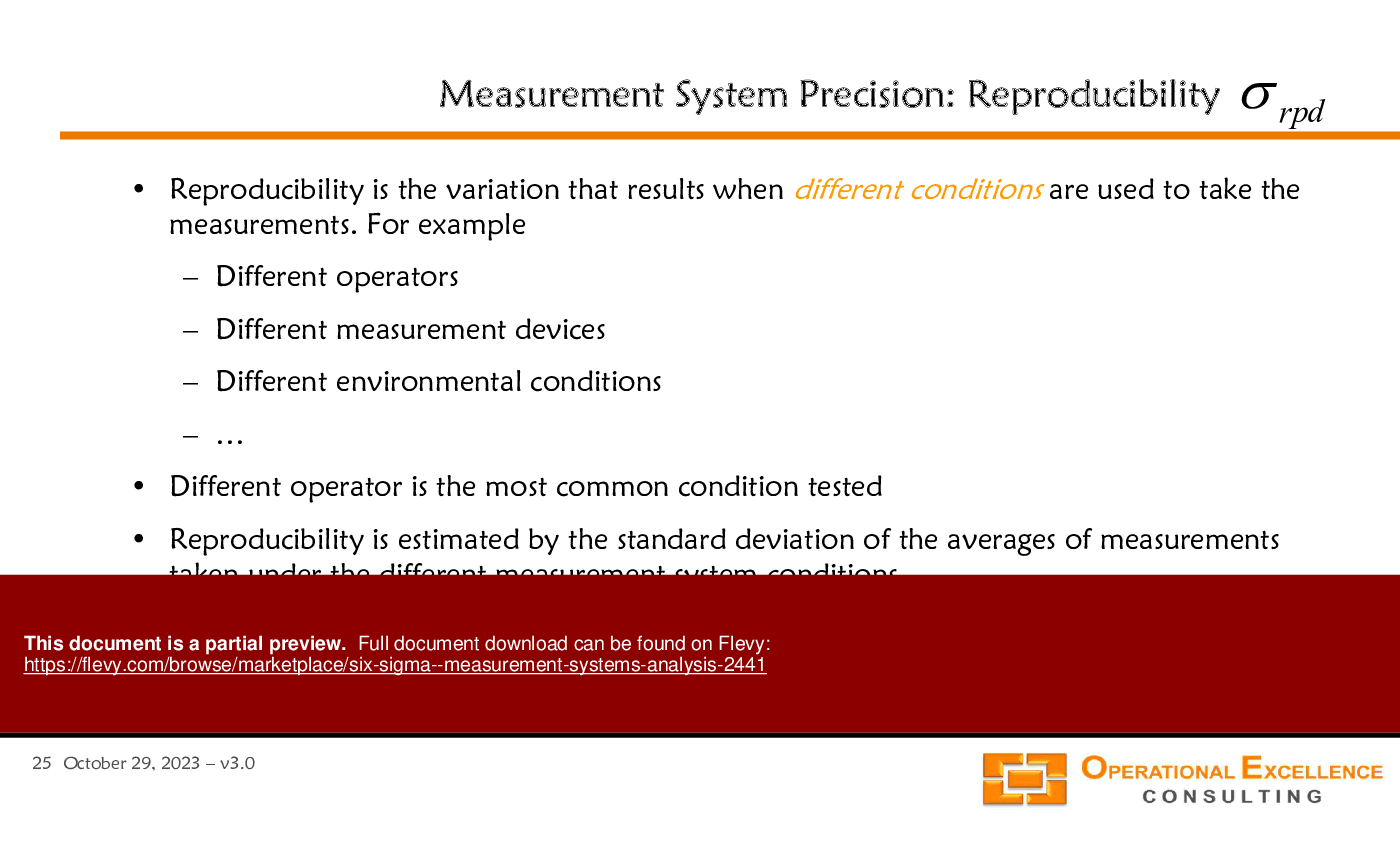
• Reproducibility - The variation in measurements taken by different operators using the same instrument.
• Calibration - The process of adjusting a measurement system to ensure its accuracy.
• Statistical Analysis - The application of statistical methods to interpret measurement data.
• Control Chart - A graphical tool used to monitor the stability of a measurement system over time.
• Process Variation - The inherent variability in a process that affects measurement outcomes.
• Attribute Measurement - A type of measurement that categorizes items as acceptable or unacceptable.
• Variable Measurement - A type of measurement that provides a numerical value for a characteristic.
• Fitness Test - A criterion used to evaluate the adequacy of a measurement system based on its % R&R ratio.
• Distinct Categories - Classification of measurements into distinct groups for analysis.
• Visual Aids - Tools used to enhance understanding and communication of measurement data.
• Automation - The use of technology to improve measurement processes and reduce human error.
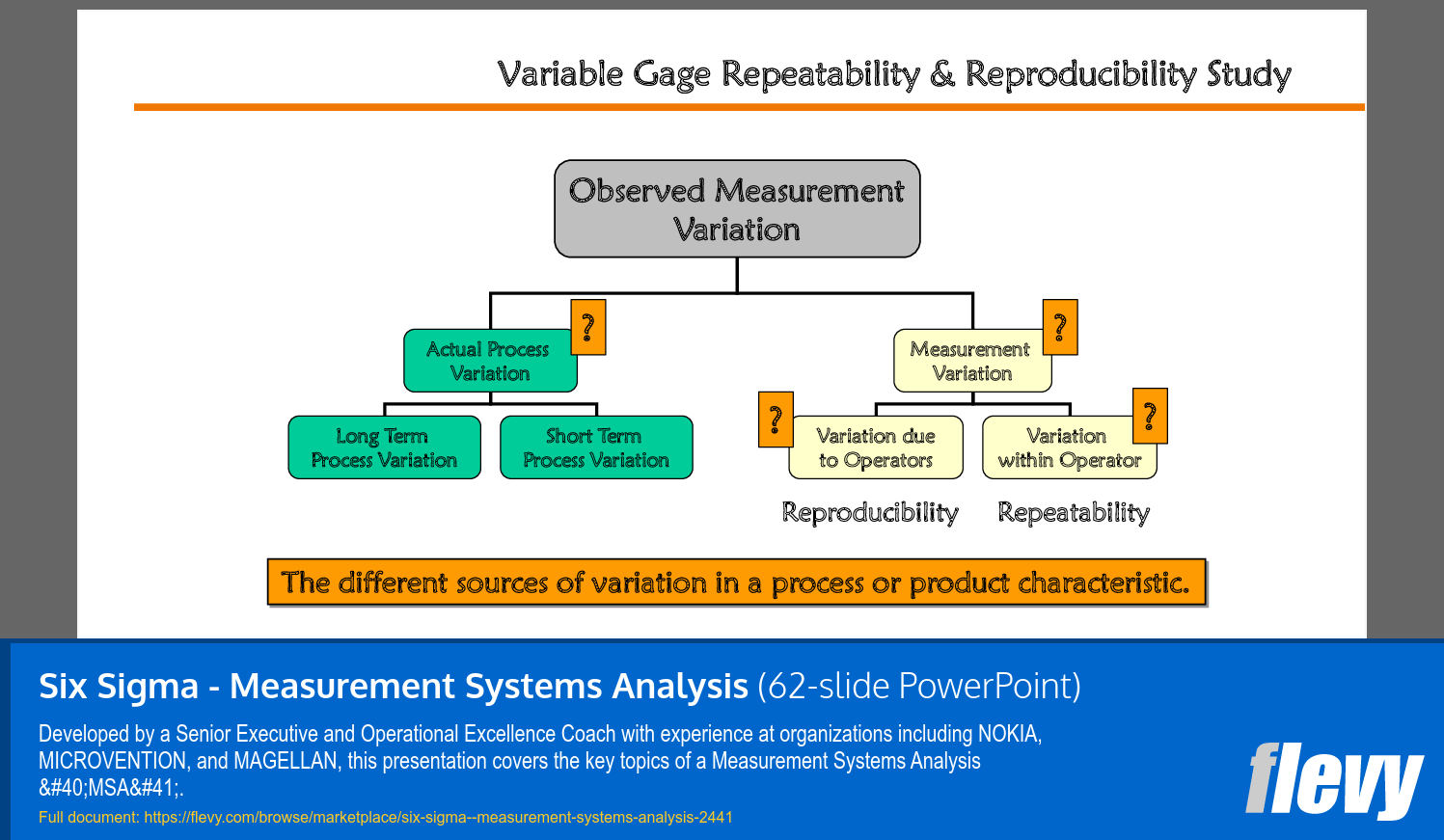
This PPT slide categorizes measurement variation into observed measurement variation and measurement system variation. Observed measurement variation includes actual process variation, which is divided into long-term and short-term variations. Long-term process variation involves changes over extended periods, while short-term process variation pertains to fluctuations in shorter timeframes. Measurement system variation consists of variation due to operators and variation within operators, addressing discrepancies from different operators and inconsistencies from the same operator measuring multiple times. Key concepts include reproducibility and repeatability, which define measurement reliability. Identifying and quantifying measurement variation is essential for organizations to enhance process quality and ensure accurate data collection, supporting informed decision-making.
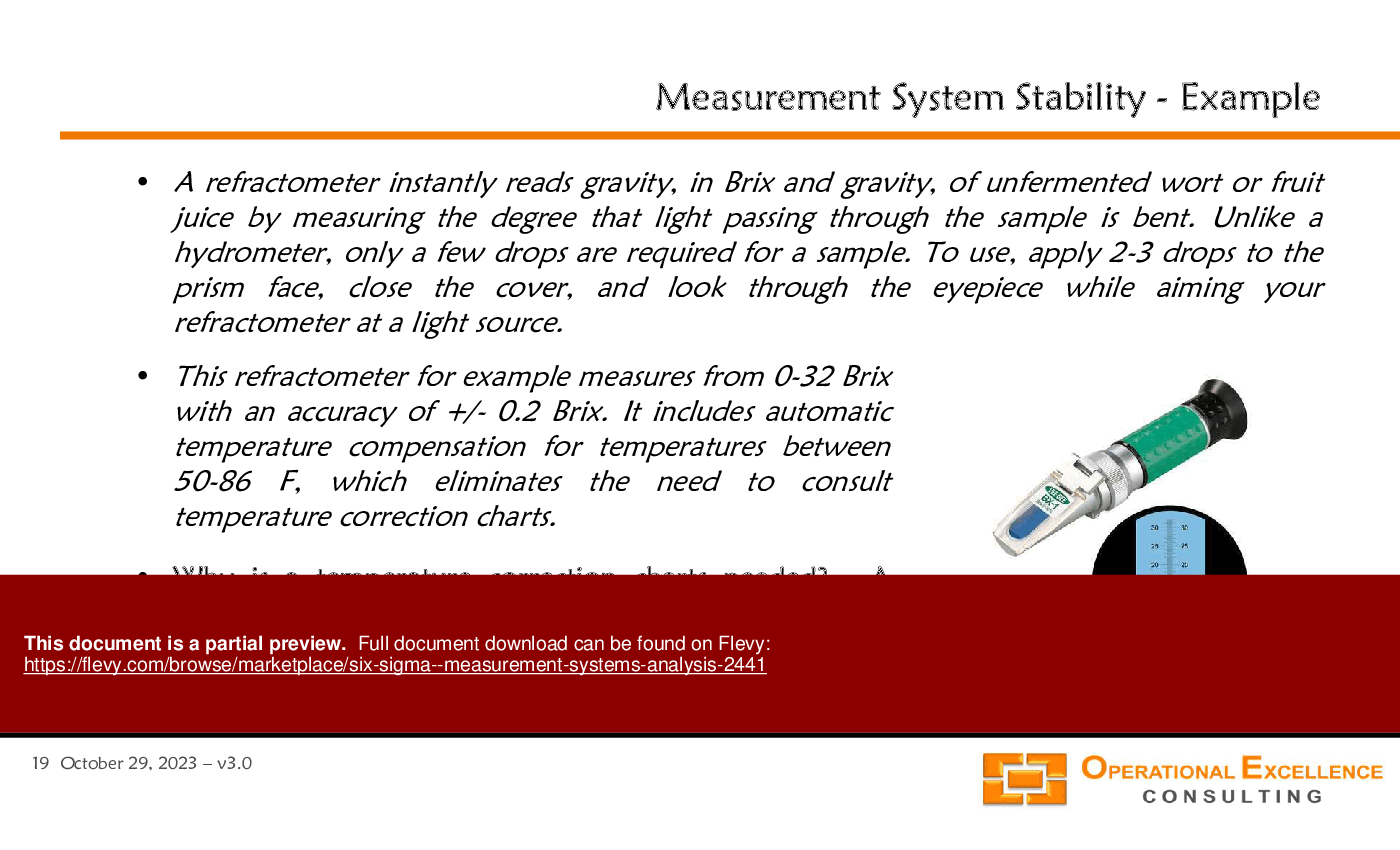
Measurement System Stability is defined as the variation in averages from at least 2 sets of measurements taken at different times using the same gage on identical parts. Stability is assessed through control charts for Measurement Systems Analysis (MSA) metrics, visually representing measurement behavior over time. A "Good Stability" chart shows consistent measurements, indicating reliability, while a "Poor Stability" chart reveals significant fluctuations, suggesting issues with accuracy. The phrase “A ten today is a ten tomorrow” emphasizes that reliable measurements yield consistent results over time. This principle is essential for organizations aiming to maintain quality and precision in operations, leading to improved decision-making and operational efficiency.
This PPT slide provides an overview of the Variable Gage Repeatability and Reproducibility Study, focusing on measurement variation sources in processes and product characteristics. "Observed Measurement Variation" branches into Actual Process Variation and Measurement Variation. Actual Process Variation includes Long Term Process Variation and Short Term Process Variation, highlighting how variations affect process stability over time. Measurement Variation is divided into Variation due to Operators and Variation within Operator, emphasizing the impact of human factors on measurement outcomes and the necessity for consistent training. The concepts of Reproducibility and Repeatability are introduced, with Reproducibility referring to variation among different operators measuring the same item, while Repeatability pertains to the same operator measuring the same item multiple times. Identifying and managing these variations is essential for enhancing measurement accuracy and process efficiency.
This PPT slide focuses on measurement system discrimination, emphasizing the precision and accuracy of measurement tools. It highlights the importance of decimal places, suggesting increments of measurement should be approximately one-tenth of the specification or process variation. Specific examples include a digital readout with a resolution of 0.001 units, a dial indicator rounding to 0.1 units, and a strip chart showing variations of 10 units or less. Poor discrimination is equated to excessive round-off error, underscoring the need for careful selection of measurement systems to avoid inaccuracies that could lead to flawed decision-making. This guidance helps organizations enhance their measurement systems to capture necessary data with appropriate precision.
This PPT slide analyzes measurement system performance using the R Chart and Xbar Chart by Operator. The R Chart shows the range of measurements from different operators, indicating a lack of control with upper control limit (UCL) and lower control limit (LCL) values. An 'in control' range chart is essential for reliable data. The Xbar Chart displays average measurements and variability, marked by control limits, with effective analysis requiring variability outside these limits to capture true performance. A minimum of 5 possible values within control limits is necessary for adequate discrimination, emphasizing robust sampling methods and continuous monitoring of measurement systems.
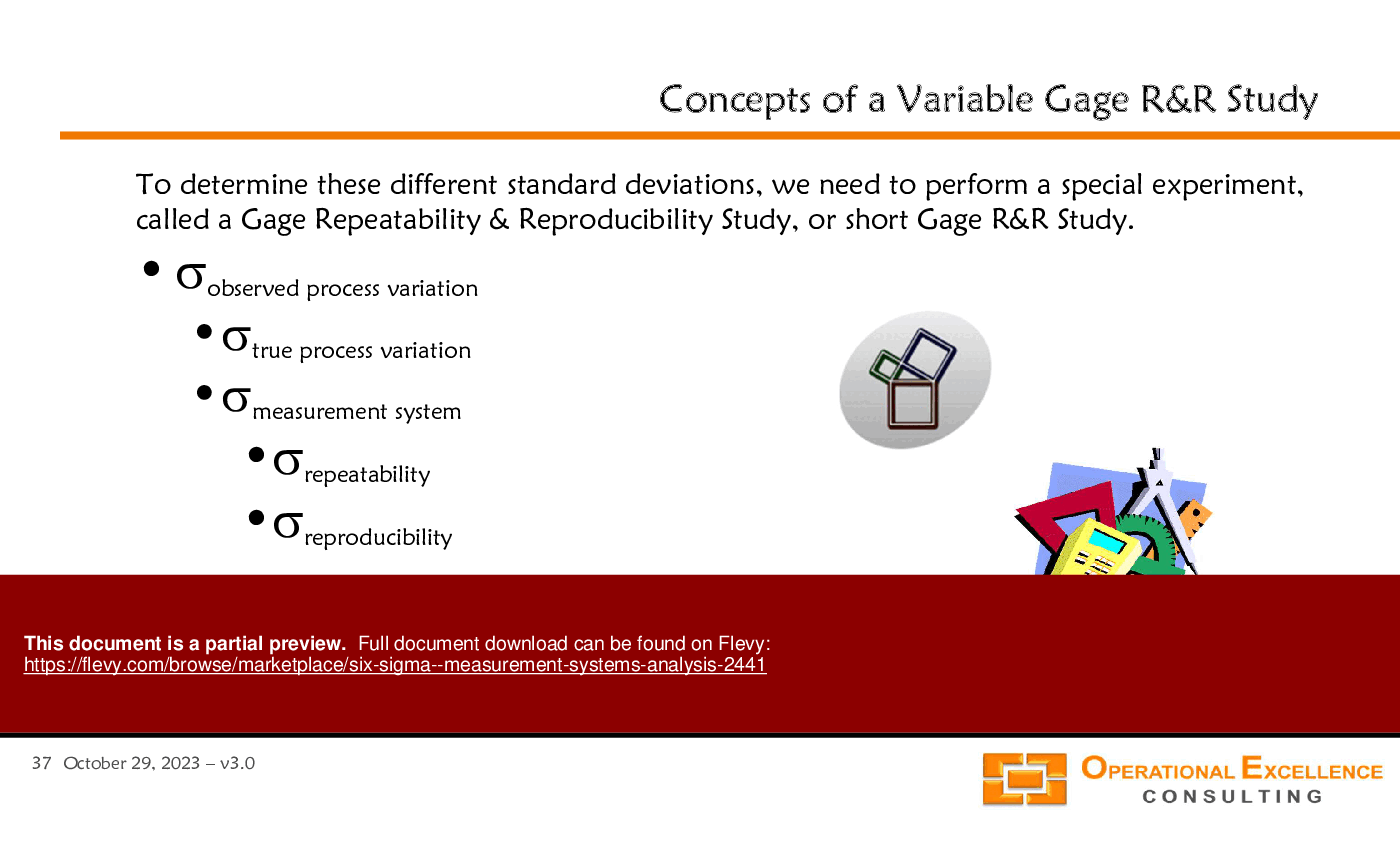
This PPT slide details Variable Gage Repeatability and Reproducibility (R&R) studies, essential for measurement systems. The standard deviation in a measurement system stems from 2 factors: repeatability and reproducibility. The total variance is the sum of variances due to these components. Repeatability measures variation when the same operator assesses the same item under identical conditions, while reproducibility addresses variation across different operators and conditions. The concept of observed process variation is divided into true process variation and variances related to repeatability and reproducibility, helping organizations identify measurement error sources. Addressing these factors enhances measurement accuracy and reliability, leading to improved quality control and operational excellence.
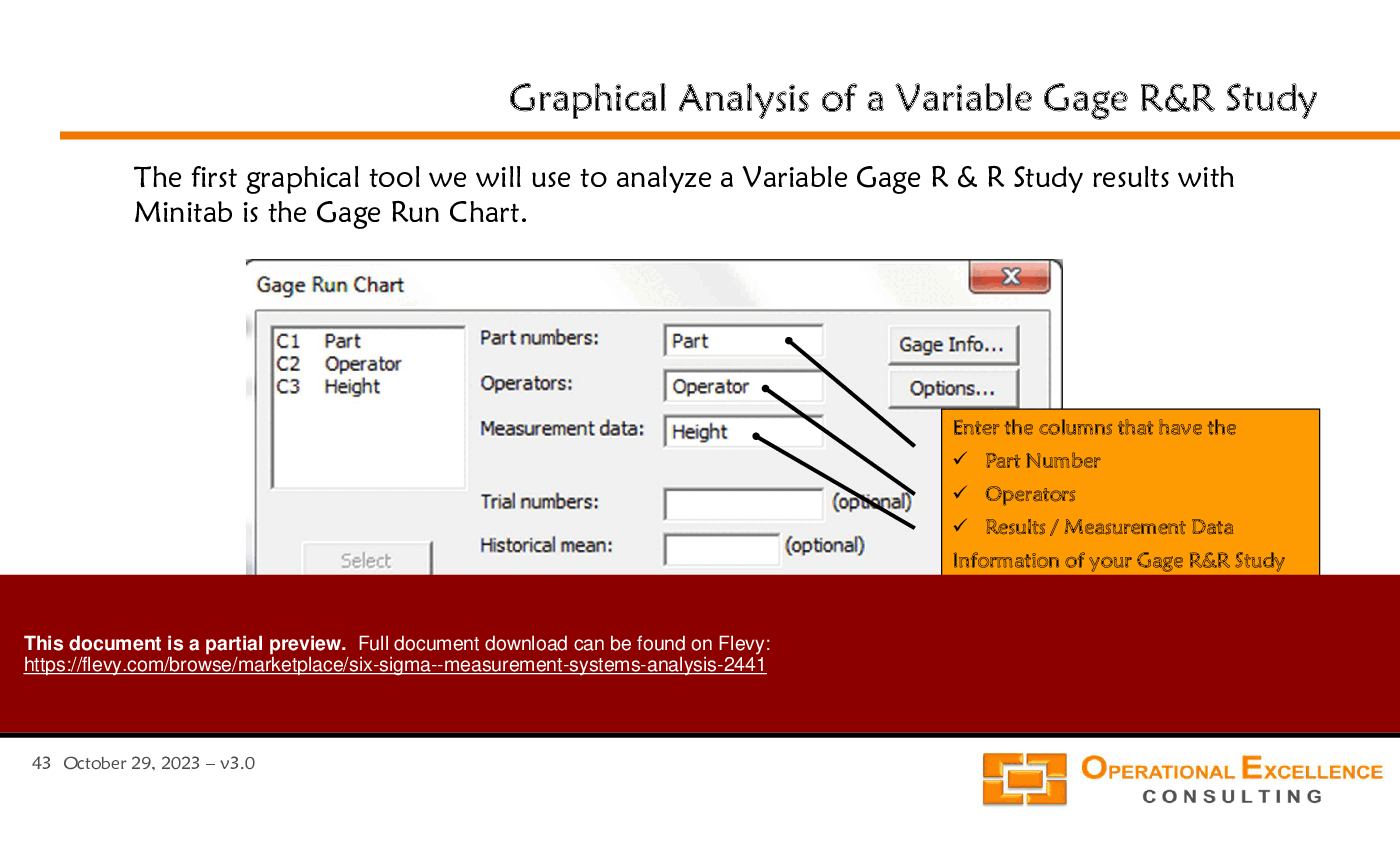
This PPT slide details a structured approach to designing a Variable Gage R&R (Repeatability and Reproducibility) Study Worksheet using Minitab. Key steps include inputting the number of products or process outcomes, which determines the study's scope, and the number of operators involved, directly influencing reliability and measurement variation. Users must also enter the number of replications to ensure robust data collection for meaningful conclusions. The worksheet includes fields for listing parts and operators, enhancing data organization. Additionally, users can input actual names for assessors, improving accountability and traceability in analysis. Detailed data entry and organization are essential for accurate measurement system evaluations, enabling organizations to understand their measurement processes and identify areas for improvement.
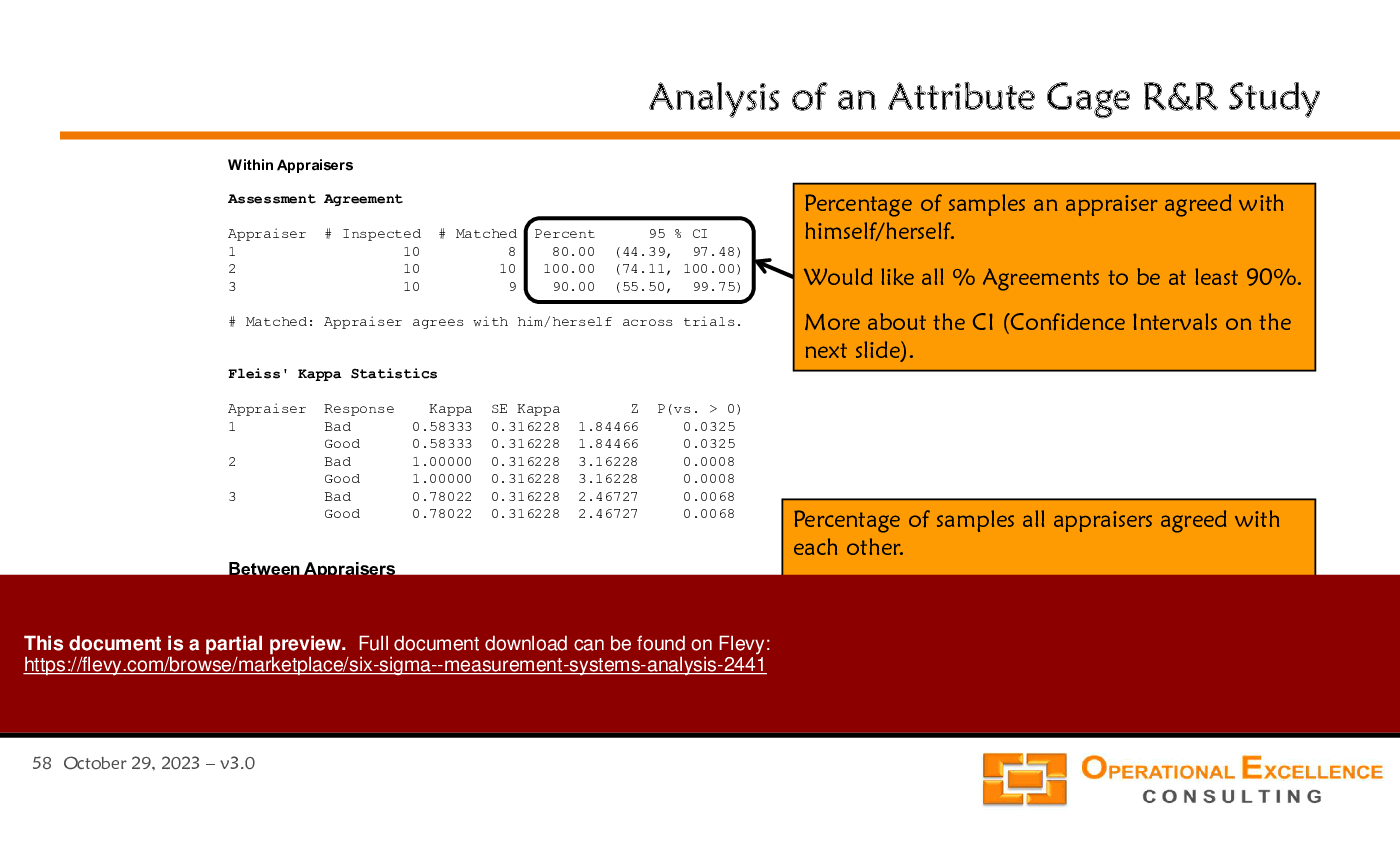
This PPT slide analyzes an Attribute Gage R&R (Repeatability and Reproducibility) study, focusing on assessment agreement within and between appraisers. The "Within Appraisers" section shows Appraiser 1 with an 80% agreement (CI: 44.39% to 97.48%), Appraiser 2 at 100%, and Appraiser 3 at 90% (CI: 55.50% to 99.75%). The "Fleiss' Kappa Statistics" section calculates Kappa values, with Appraiser 1 at 0.58333 (moderate agreement) and Appraiser 2 at 1.00000 (perfect agreement), supported by standard error (SE) and Z-values. The "Between Appraisers" section reveals a 60% agreement rate among all appraisers, indicating potential discrepancies and the need for further investigation into assessment consistency. Understanding individual and collective assessment reliability is crucial in measurement systems analysis.
This PPT slide analyzes the % R&R Ratio from a Gage R&R Study, which assesses measurement system effectiveness in determining process variation. The % R&R Ratio is calculated by comparing measurement system variation to observed process variation, expressed as a percentage. Measurement systems are categorized based on their % R&R Ratio: below 10% is excellent, below 30% is adequate, but needs improvement, and above 30% requires significant enhancement before further process improvements. Ensuring measurement accuracy is critical for optimizing operational processes, guiding strategic decisions on measurement system investments, and enhancing quality control and process efficiency.
This PPT slide presents a comparative analysis of 2 measurement systems: Gage A and Gage B. Gage A shows results from 1 to 5 with 5 distinct outcomes, indicating a discrimination level of 5, which may lack sensitivity for precise applications. In contrast, Gage B also ranges from 1 to 5, but demonstrates 9 distinct outcomes, suggesting a higher discrimination level and better capability to differentiate process variations. An ideal discrimination level for effective measurement systems is 10 or more, though achieving this benchmark can be challenging. The dot plots visually represent the distribution and variation captured by each gage, highlighting the importance of selecting a measurement system that ensures quality and reliability in process improvements and quality control.
This PPT slide analyzes the lack of reproducibility in measurement systems, focusing on operator interactions with various samples. A chart illustrates average performance values for different operators, where ideally, lines should be parallel, indicating consistent results. However, intersecting and diverging lines reveal variability in operator performance. Key points include plotting each operator's performance by sample to assess consistency, the importance of parallel lines for uniformity, and the identification of crossing lines as indicators of interactions that lead to measurement inconsistencies. Addressing these "Operator – Sample" interactions is essential for improving reproducibility, enabling organizations to standardize processes and enhance measurement reliability.
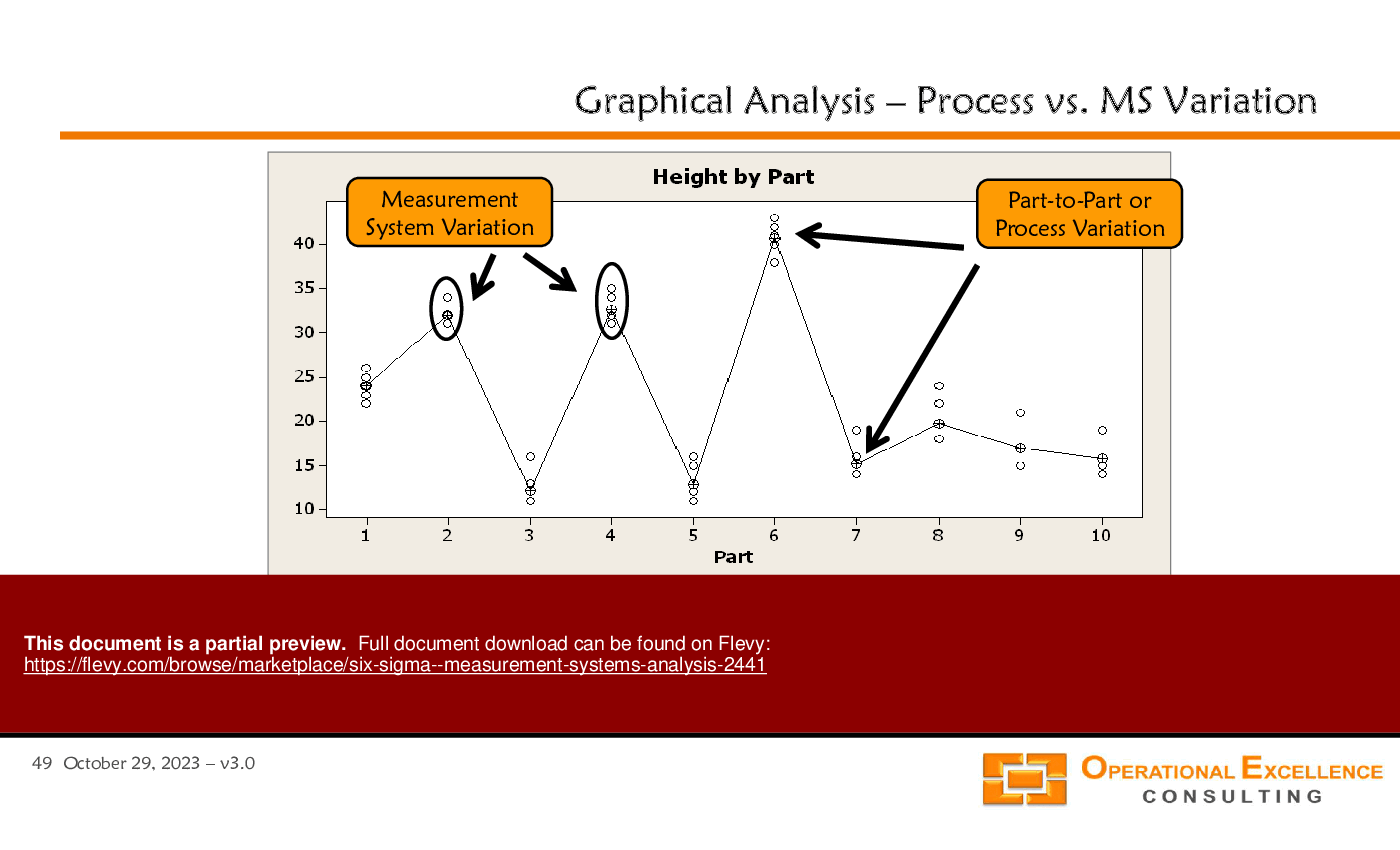
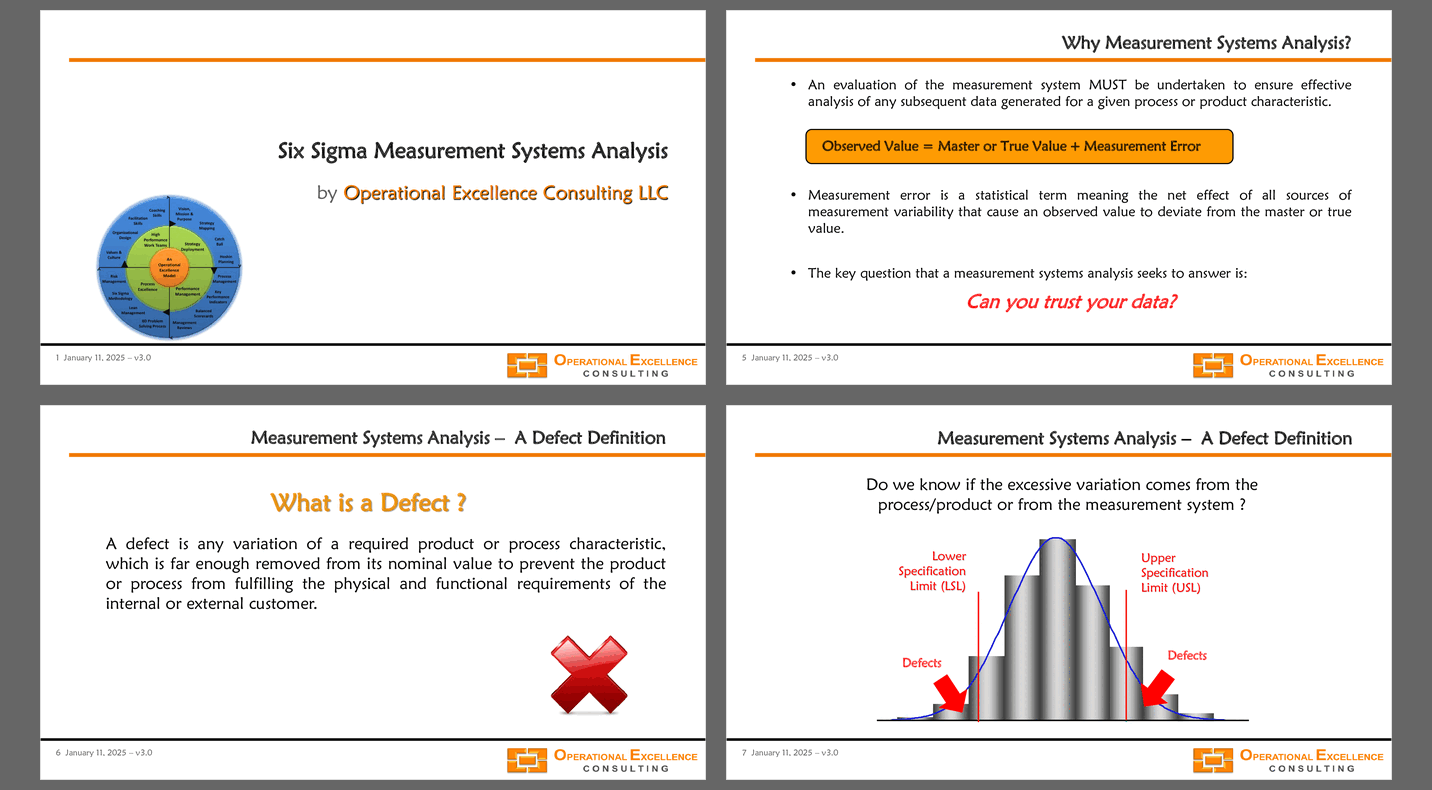
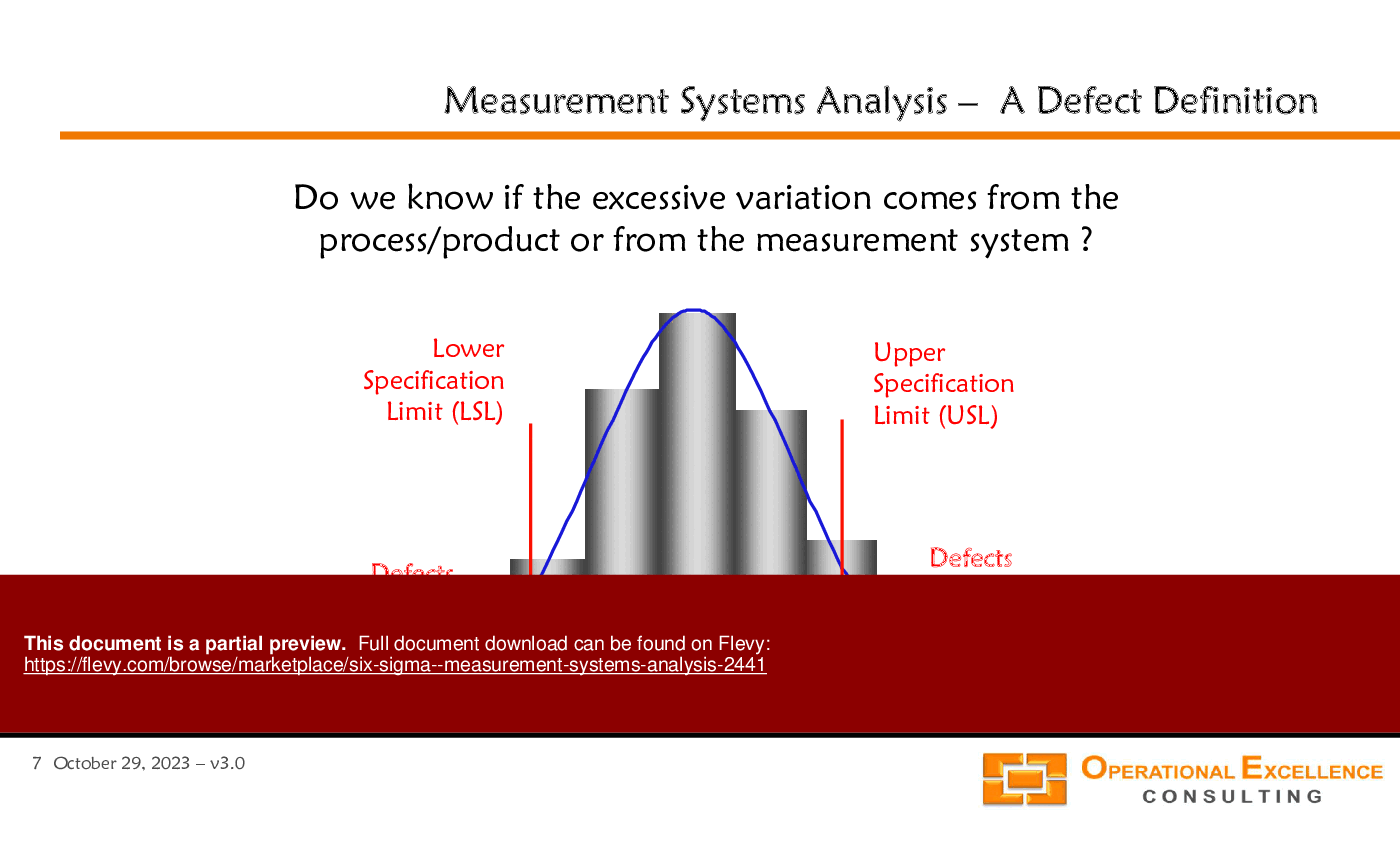
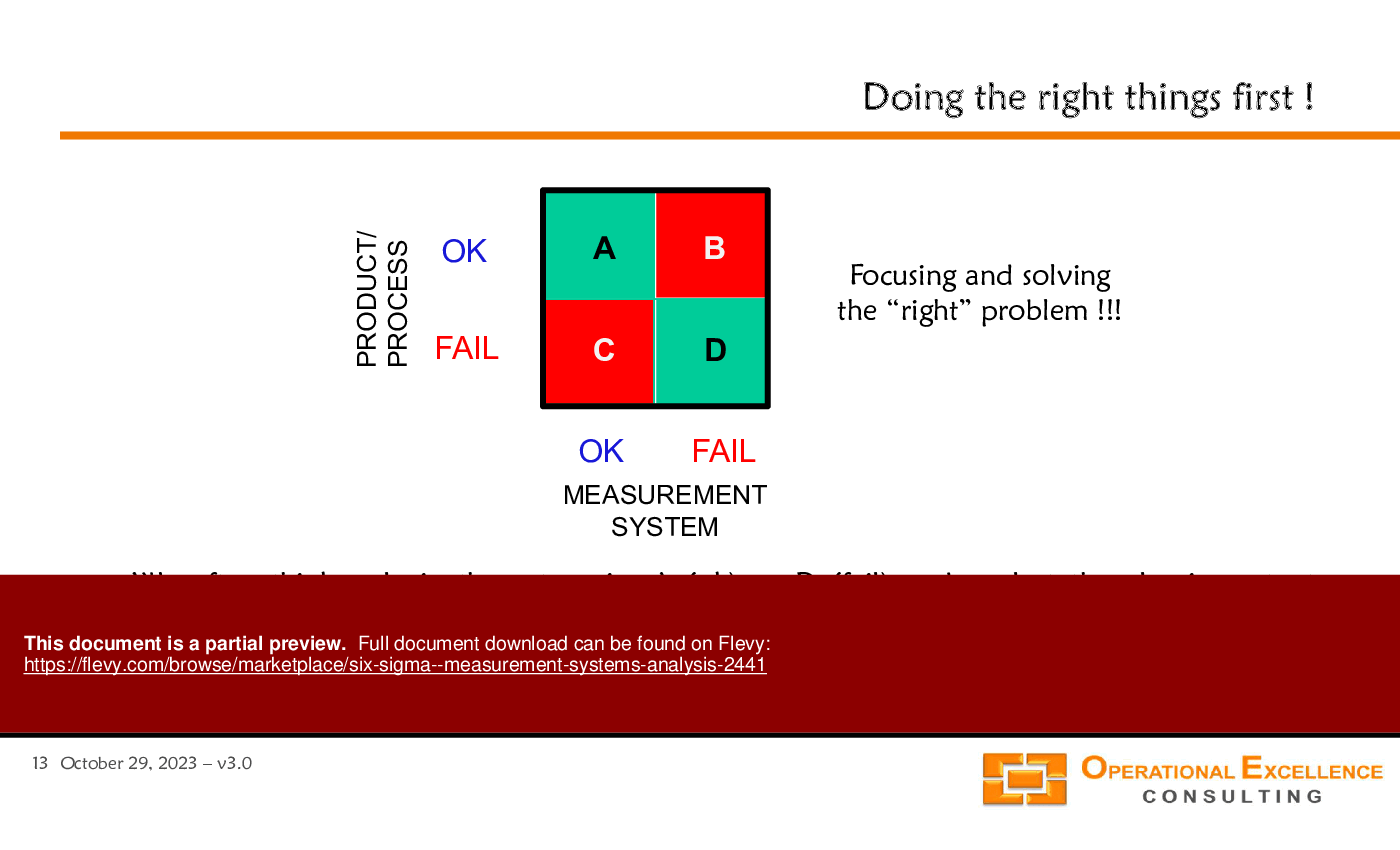
This PPT slide focuses on Measurement Systems Analysis and the distinction between variation caused by the measurement system versus the process or product. It features a bell curve illustrating measurement distribution, with Lower Specification Limit (LSL) and Upper Specification Limit (USL) indicating acceptable ranges. Measurements outside these limits are classified as defects. Understanding these sources of variation is essential for quality management and operational excellence, as misinterpretation of data can lead to poor decisions. Addressing measurement system issues enables organizations to enhance processes and reduce defects, supporting effective quality control strategies. This analysis is integral to Six Sigma methodologies and rigorous quality management practices.
Source: Best Practices in MSA, Gage R&R PowerPoint Slides: Six Sigma - Measurement Systems Analysis PowerPoint (PPTX) Presentation Slide Deck, Operational Excellence Consulting LLC
Developed by a Senior Executive and Operational Excellence Coach with experience at organizations including NOKIA, MICROVENTION, and MAGELLAN, this presentation covers the key topics of a Measurement Systems Analysis (MSA).
Operational Excellence Consulting LLC provides assessments, training solutions, kaizen event facilitation, and implementation support to enable our clients to achieve superior performance through Operational Excellence - Strategy Deployment & Hoshin Planning, Performance Management & Balanced Scorecards, Process Excellence & Lean Six Sigma, and High
... [read more] Performance Work Teams.
Frank Adler co-founded OEC LLC in 2009 to follow his passion for Operational Excellence and to be able to work with individuals and organizations that share this passion.
He is an accomplished and recognized Operational Excellence, Lean Management, and Six Sigma coach, with over 20 years of domestic and international executive leadership experience in General Management, multi-site Operations & Supply Chain Management, and Quality & Customer Support Management.
Frank is a certified and experienced Lean Six Sigma Master Black Belt with a proven track record of implementing these methods, concepts, and tools in various organizations and industries.
He holds a Master of Science in Mathematics & Physics from the Freie University of Berlin (Germany) and a Doctor of Philosophy in Applied Mathematics & Industrial Economics from the Helsinki University of Technology (Finland).
Since 2012, we have provided business templates to over 10,000 businesses and organizations of all sizes, from startups and small businesses to the Fortune 100, in over 130 countries.
"I have used Flevy services for a number of years and have never, ever been disappointed. As a matter of fact, David and his team continue, time after time, to impress me with their willingness to assist and in the real sense of the word. I have concluded in fact
that it is not at all just a repository of documents/resources but, in the way that David and his team manage the firm, it is like dealing with consultants always ready to assist, advise and direct you to what you really need, and they always get it right.
I am an international hospitality accomplished senior executive who has worked and lived during the past 35 years in 23 countries in 5 continents and I can humbly say that I know what customer service is, trust me.
Aside from the great and professional service that Flevy's team provide, their wide variety of material is of utmost great quality, professionally put together and most current.
Well done Flevy, keep up the great work and I look forward to continue working with you in the future and to recommend you to a variety of colleagues around the world.
"
– Roberto Pelliccia, Senior Executive in International Hospitality
"As a small business owner, the resource material available from FlevyPro has proven to be invaluable. The ability to search for material on demand based our project events and client requirements was great for me and proved very beneficial to my clients. Importantly, being able to easily edit and tailor
the material for specific purposes helped us to make presentations, knowledge sharing, and toolkit development, which formed part of the overall program collateral. While FlevyPro contains resource material that any consultancy, project or delivery firm must have, it is an essential part of a small firm or independent consultant's toolbox.
"
– Michael Duff, Managing Director at Change Strategy (UK)
"Flevy is now a part of my business routine. I visit Flevy at least 3 times each month.
Flevy has become my preferred learning source, because what it provides is practical, current, and useful in this era where the business world is being rewritten.
many challenges and there is the need to make the right decisions in a short time, with so much scattered information, we are fortunate to have Flevy. Flevy investigates, selects, and puts at our disposal the best of the best to help us be successful in our work.
"
– Omar Hernán Montes Parra, CEO at Quantum SFE
"Last Sunday morning, I was diligently working on an important presentation for a client and found myself in need of additional content and suitable templates for various types of graphics. Flevy.com proved to be a treasure trove for both content and design at a reasonable price, considering the time I
saved. I encountered a download issue during the ordering process. However, a quick email to Flevy's support team, even on a Sunday (!!!), resulted in assistance within less than an hour, allowing me to download the content I needed. Fantastic job, Flevy! I give 5 stars for both content/price and customer service. Thank you!
"
– M. E., Chief Commercial Officer, International Logistics Service Provider
"FlevyPro has been a brilliant resource for me, as an independent growth consultant, to access a vast knowledge bank of presentations to support my work with clients. In terms of RoI, the value I received from the very first presentation I downloaded paid for my subscription many times over! The
quality of the decks available allows me to punch way above my weight – it's like having the resources of a Big 4 consultancy at your fingertips at a microscopic fraction of the overhead.
"
– Roderick Cameron, Founding Partner at SGFE Ltd
"As a young consulting firm, requests for input from clients vary and it's sometimes impossible to provide expert solutions across a broad spectrum of requirements. That was before I discovered Flevy.com.
Through subscription to this invaluable site of a plethora of topics that are key and crucial to consulting, I
have been able to exceed expectations and deliver quality advice and solutions to my clients. The quality and expertise of the authors are exemplary and gives me great confidence to use as part of my service offerings.
I highly recommend this company for any consultant wanting to apply international best practice standards in their service offerings.
"
– Nishi Singh, Strategist and MD at NSP Consultants
"As a consulting firm, we had been creating subject matter training materials for our people and found the excellent materials on Flevy, which saved us 100's of hours of re-creating what already exists on the Flevy materials we purchased."
– Michael Evans, Managing Director at Newport LLC
"[Flevy] produces some great work that has been/continues to be of immense help not only to myself, but as I seek to provide professional services to my clients, it gives me a large "tool box" of resources that are critical to provide them with the quality of service and outcomes they are expecting."
– Royston Knowles, Executive with 50+ Years of Board Level Experience
Save with Bundles
This document is available as part of the following discounted bundle(s):
Receive our FREE presentation on Operational Excellence
This 50-slide presentation provides a high-level introduction to the 4 Building Blocks of Operational Excellence. Achieving OpEx requires the implementation of a Business Execution System that integrates these 4 building blocks.
Receive our FREE presentation on Operational Excellence
Get Our FREE Product.
This 50-slide presentation provides a high-level introduction to the 4 Building Blocks of Operational Excellence. Achieving OpEx requires the implementation of a Business Execution System that integrates these 4 building blocks.